

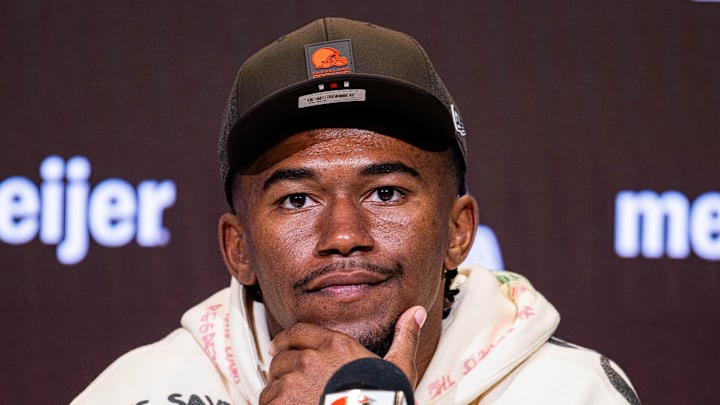
Despite last season’s hiccups, the AFC North remains the toughest division in the NFL. Each year, the Pittsburgh Steelers have found rivals on their heels. It is hard to admit, but it is the current reality. And the 2026 NFL Draft did not do much to widen that gap in their favor.
The truth is, the Cleveland Browns had an exceptional draft.
Complimenting a rival feels counterproductive, especially one with such a deep and heated history. But it is hard to deny the effectiveness of their draft class. That truth probably stings a little more because the Steelers' class did not make much of a splash. Omar Khan’s front office chose to prioritize team need over pure value early.
And it began in round one.
The Browns attacked the weekend aggressively, drafting offensive tackle Spencer Fano (No. 9) and wide receiver KC Concepcion (No. 24) in the first round. Both were high-value prospects who many believed could land on Pittsburgh’s board. When it was time for Khan’s group to respond, they stumbled.
The mishap surrounding Makai Lemon became a national embarrassment, and the investment in Max Iheanachor felt like an unprovoked gamble rather than a calculated move.
But the frustration did not stop there.
The Pittsburgh Steelers were outperformed by their AFC rivals during the 2026 NFL Draft
As the weekend unfolded, it felt like Cleveland was making all the right calls. Denzel Boston (No. 39) became another painful miss, a Washington standout many expected Pittsburgh to target. Instead of making a move, Omar Khan stayed patient. He allowed a division rival to snatch multiple top-tier prospects before making a decisive move of his own, despite clear positional needs.
He eventually invested in Germie Bernard, but it cost the franchise two additonal picks.
Later in the second round, the Browns selected Emmanuel McNeil Warren (No. 58), another addition that felt like a consecutive direct hit. They even used a sixth-round pick on dual-threat quarterback Taylen Green at (No. 182). Yes, the Steelers eventually landed Drew Allar (No.76), but at times it felt like Cleveland was executing the blueprint Pittsburgh should have followed.
And Omar Khan let it unfold.
Watching a rival improve in real time is never easy. It becomes even tougher when there is a clear opportunity to match that progress. Pittsburgh remained committed to its approach. They prioritized fit and system value over simply taking the best player available. It was a significant gamble and opened the door for other franchises to capitalize.
That strategy forces a team into a narrow path. It also demands consistent development with very little margin for error.
That is a thin rope to walk in a league built on unpredictability. Still, I respect Khan’s vision. There is logic behind building a roster that fits a clear identity. But it is difficult to ignore the contrast when the Browns maximized their weekend while Pittsburgh is left with lingering questions.
It creates an uneasy feeling knowing a divisional rival may have taken a step forward while the Steelers remain in evaluation mode. Only time will tell how these classes truly stack up, but right now, the gap does not feel small.
 Add us as a preferred source on Google