

The Pittsburgh Steelers and Buffalo Bills don't have much in common these days, but they share one specific flaw from a roster standpoint: A lack of premier talent at wide receiver.
The Bills made a move to help fix that on Wednesday, acquiring wide receiver DJ Moore from the Chicago Bears along with a fifth-round pick in exchange for a second-round pick. The deal appears to be a strong return for Chicago and could influence the wide receiver trade market across the league.
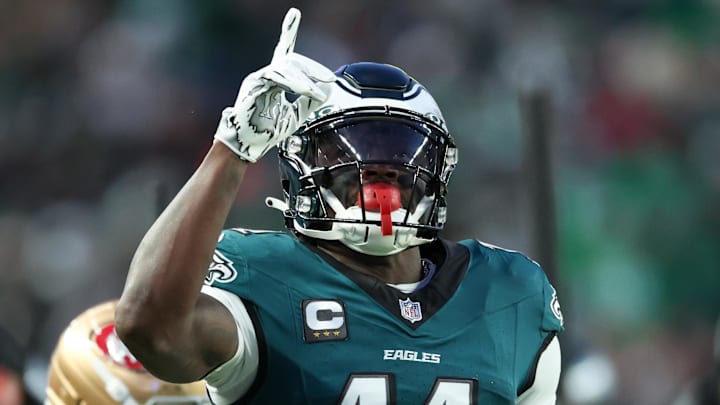
Because of that market shift, any potential trade the Steelers may try to make just got more expensive. After seeing the price set in the Moore deal, teams, including Pittsburgh, may be more hesitant to pull the trigger on a major move for another star wide receiver. Most notably, it could completely change the pursuit for Eagles WR A.J. Brown.
If the Pittsburgh Steelers were ever going to call about A.J. Brown, the asking price just became much steeper
The Pittsburgh Steelers were always unlikely to enter serious trade talks for A.J. Brown. However, the possibility could not be completely ruled out.
Assistant general manager Andy Weidl played a significant role in bringing Brown to the Philadelphia Eagles during his time in Philadelphia, and the Steelers showed last year they were willing to make a major move at wide receiver when they traded for DK Metcalf. Because of those connections and recent history, it was at least something that could have been explored.
Even then, the financial side would have made things complicated. Paying two wide receivers more than $50 million combined per season, especially when both players are close in age, would likely make the front office hesitant.
While the Steelers technically have the cap space to make a move like that work, the bigger issue is that the team currently does not have a clear starting quarterback on the roster. A move of this magnitude is usually made by a team that believes it is one piece away from competing for a Super Bowl.
The recent trade involving D. J. Moore from the Chicago Bears to the Buffalo Bills may have shifted the market even further. Again, Buffalo sent a second-round pick to Chicago, which many around the league viewed as an overpay for Moore at this stage of his career. Moore has been a productive receiver, but he has never truly been considered an elite player and is now closer to being a mid-tier number two option than a true number one target.
With that deal setting a new benchmark, Eagles general manager Howie Roseman now holds significant leverage if Philadelphia were ever to consider moving Brown. Both Brown and Moore have similar contracts with comparable years remaining, but Brown is clearly the more impactful player. If Chicago was able to secure a second-round pick for Moore, Philadelphia could reasonably demand even more for Brown.
The Steelers do possess the draft capital and the financial flexibility to make a move if they truly wanted to pursue it. However, for a team that still has several areas of the roster to rebuild, committing that level of money and draft capital may not be the wisest decision.
If Moore had been traded for something like a third-round pick or an early-day three selection, then a similar price for Brown might have made sense. After the Bears and Bills deal, though, the asking price for Brown could now climb into the range of a late first-round pick or at least a second-round pick plus additional assets, making a trade even more unlikely for Pittsburgh.
 Add us as a preferred source on Google