

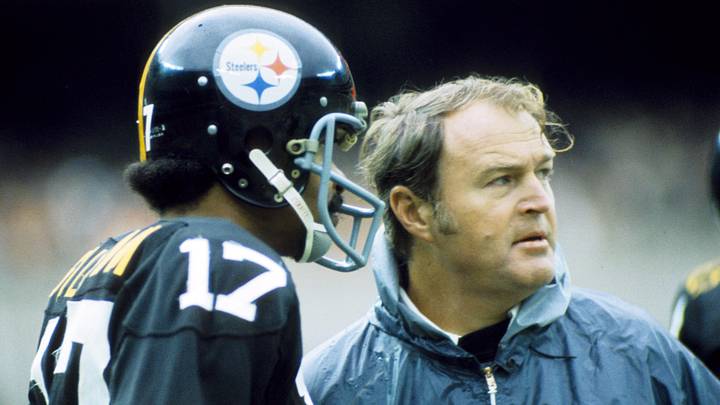
If you are a Pittsburgh Steelers fan and are as old as I am, you undoubtedly remember with great fondness the glory days of the 1970s. Those glory days actually commenced in 1969 with the hiring of one of the greatest coaches in NFL history, Chuck Noll. During the decade following the hiring of Noll, we would seemingly do no wrong.
The Steelers won four Super Bowls over the span of six years and, frankly, should have won at least one more. Had it not been for injuries to both Franco Harris and Rocky Bleier, we probably would have beaten the Raiders in the 1976 AFC Championship Game and probably would have won the Super Bowl.
In 1977, the Steelers made it to the AFC Divisional Round of the playoffs, but were summarily dispatched by the Denver Broncos. That season was marred by off-field turmoil that resonated throughout the season. I still think we would have made it to the Super Bowl that year, but that is a discussion for another time.
The Pittsburgh Steelers' Super Bowl era ended because of questionable drafts and evolving player mindsets
The Steelers would round out the decade of the 1970s with back-to-back Super Bowl wins following the 1978 and 1979 seasons. Once the decade of the 1980s commenced, we would find ourselves in an uncomfortable and unfamiliar position: a non-Super Bowl-winning team.
Although the Steelers would make the playoffs four times over the course of the decade, we would never hoist the Lombardi Trophy with the frequency we enjoyed in the previous decade. There are myriad reasons for the decline we witnessed in the 1980s, but, as far as I am concerned, two reasons are glaring.
First, the Steelers did not draft very well for the entire decade of the 1980s, which is frankly surprising to me since we drafted four Hall of Fame players in 1974. If you look at the roster of those Super Bowl teams of the 1970s, you will find nine players who were drafted by us who ended their journeys by being enshrined in the Pro Football Hall of Fame.
The Steelers did not draft another future Hall of Fame player until 1987. We also drafted a future Hall of Fame player in 1988, but by that time, the damage, so to speak, had already been done. The confluence of the retirement of Terry Bradshaw following the 1983 season, the defection of Cliff Stoudt to the original USFL in 1984, and arguably one of the worst drafts in Steelers history spelled doom for Chuck Noll.
To encapsulate, in 1989, we had two first-round picks. Instead of trading up to take Barry Sanders, the Steelers selected Tim Worley. Later in the first round, Pittsburgh selected Tom Ricketts, who was very good at Pitt, but did not pan out for us. The reason I say that the 1989 draft was arguably one of the worst in Steelers history is this: If they needed or wanted a running back, why not trade up for the best running back in the draft?
I don't think we need to belabor the issue with the drafts, but suffice it to say, they were questionable and put us behind the eight ball, as it were, in many respects. Several early-round draft picks simply did not pan out and did not play up to their potential. Was it coaching, was it on the player, or was it a combination of both?
The other reason for the demise of the greatest coach in Steelers history, in my opinion, of course, was the evolution of the player mindset. Here's what I mean by that: The Steelers players of the 1970s were self-motivated, or motivated each other, at least from my perspective.
Chuck Noll was not a "rah, rah" type of coach. He was a teacher. He and his staff taught technique and responsibility on a certain play, for example, but Noll was not the type of motivator that Bill Cowher was, for example.
That approach was successful for the decade of the 1970s for obvious reasons. Once the 1980s rolled around, I believe that the player mindset, philosophy, makeup, or however you want to label it, changed dramatically.
While some Steelers players were still self-motivated, many of them simply needed extraneous motivation, but Noll was not that type of coach. I vividly remember seeing interactions on the sidelines between Noll and players that led me to conclude that perhaps he was altering his approach to be more of an energy-inspiring type of coach, but, as I stated earlier, I think it was a case of too little, too late.
When we lost in the AFC Divisional round in 1989, I knew it was over. In 1990, we missed the playoffs despite a winning record. In 1991, we managed only seven wins. After the season, Chuck Noll retired, thus ending a remarkable run of winning for the Steelers franchise. I was deeply saddened on that day. Perhaps you were as well.
 Add us as a preferred source on Google