

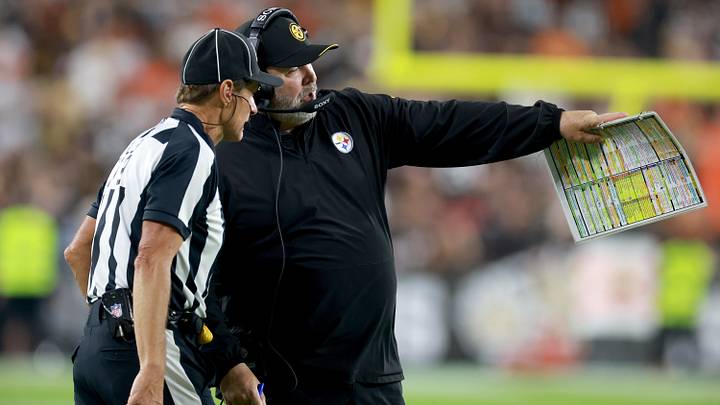
Mike McCarthy moved defensive coordinator Patrick Graham from the booth to the sideline for the Pittsburgh Steelers’ 34-22 win over the Indianapolis Colts, giving players a chance to discuss adjustments face-to-face with the coach calling their defense.
Graham had called the first four regular-season games from upstairs. Assistant head coach and secondary coach Joe Whitt Jr. was already on the field.
The Week 4 broadcast against the Cleveland Browns showed T.J. Watt looking livid during a headset exchange with Graham, who later described it as routine football communication. I suspect that exchange helped push McCarthy toward a change he’d already considered.
I like letting Graham hear the whole position group work through an adjustment. Players could already reach him by headset, but being there could make follow-up questions easier. He’s also giving up advantages he valued, and McCarthy needs more than a win to call that a successful exchange.
Pittsburgh Steelers’ sideline move under Mike McCarthy comes with a communication tradeoff
“There’s nothing better than face-to-face communication,” McCarthy said afterward. He traced his preference to the Green Bay preseason game, said he hadn’t asked players about the move, and left the arrangement open to further evaluation.
Graham preferred the booth because he could identify offensive personnel early and spread out his call sheets. As he explained in August, Whitt, defensive pass-game coordinator Jason Simmons, and inside linebackers coach Scott McCurley relayed information to players below while he concentrated on his calls.
Coach McCarthy spoke to the media following our win over the Colts. @Acrisure pic.twitter.com/UVzrHxvbO8
— Pittsburgh Steelers (@steelers) October 11, 2026
An early personnel report buys Graham time to choose Pittsburgh’s defensive package. If an offense sends in a second tight end, he might want another linebacker or keep an extra defensive back against the pass. Two tight ends don’t automatically mean a run, and recognizing the package quickly helps preserve his options.
Losing that elevated view could increase his reliance on assistants’ reports, whether they’re watching from the booth or the field. Those observations still have to reach him while he’s talking with players.
Keeping Graham beside Whitt, whose job centers on the secondary, could help resolve a disputed coverage assignment between series. Graham can hear both defenders’ explanations, settle the call, and check that they’re describing the same responsibility. The previous setup already gave him experienced assistants to handle those conversations.
Faster feedback could also keep Pittsburgh from changing a sound call after a player simply lost his matchup. Graham needs to know whether the instruction failed to reach someone or whether an opponent beat a defender who understood his job.
Jalen Ramsey recently called for shared practice reps so new teammates could hear the secondary’s terminology on the field. Graham can reinforce those instructions between series; he can’t supply the repetitions that teach a corner how the safety beside him will react.
Fewer repeated coverage errors after an adjustment and fewer late clarifications before the snap would support keeping this setup. McCarthy said he’d evaluate it, but his explanation of the switch didn’t identify a successful correction caused by the move.
Direct access can still leave a substitute out of the conversation. If Graham changes a coverage check with the starting corner between possessions, the next corner entering the rotation needs that correction, too. He could follow the old call perfectly and still leave a receiver uncovered.
 Add us as a preferred source on Google