

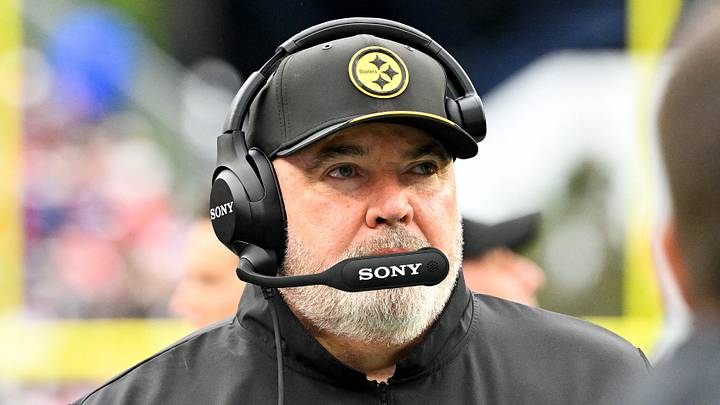
The Pittsburgh Steelers knew New England would pressure Aaron Rodgers, spent extra practice time building answers, and still let the expected plan bury their offense in Sunday's 20-3 loss. The Rodgers and offensive line concerns were obvious from the start. Head coach and play caller Mike McCarthy made the failure worse with his postgame explanation.
McCarthy said the Steelers expected pressure and man coverage, which is exactly how Mike Vrabel attacked them. The Patriots changed up the looks, but Pittsburgh had spent the week preparing for that kind of challenge. Once the game started, those answers fell apart.
Rodgers finished 23 of 39 for 187 yards with an interception, averaged 4.8 yards per attempt, and took four sacks. Pittsburgh produced one offensive play of at least 20 yards and converted 2 of 12 third downs. A blitz removes defenders from coverage to add rushers, creating open grass and one-on-one chances when the offense identifies it. Pittsburgh got the punishment without collecting the payoff.
Pittsburgh Steelers prepared for pressure without mastering the answers vs. New England Patriots
McCarthy described the failure after the game: “Expected pressure, got pressure. As an offensive coach, I always welcome the opportunity to play against pressure defense. I think it's clearly an opportunity for big play potential. That was not the case today.”
New England blitzed on 21 of Rodgers' 44 dropbacks (47.7 percent) and generated 17 pressures on Rodgers (38.6 percent). The damage went beyond a broken blocker. Pittsburgh lost the mental and physical aspects of pass protection.
Christian Elliss's blind-side strip-sack in the second quarter was a free-rusher problem. Rodgers called it a communication lapse. The quarterback, center, line, and eligible protectors have to identify the extra man, slide toward him, or replace his blitz with a hot throw. Instead, Pittsburgh went from third-and-7 at New England's 22 to fourth-and-43 after the loose-ball scramble.
Christian Barmore's fourth-quarter strip-sack exposed a separate failure. New England rushed four, Barmore beat right guard Spencer Anderson one-on-one, and Elijah Ponder returned the fumble for a touchdown. No hot route fixes a guard loss that reaches the quarterback quickly enough to put the ball on the ground.
Christian Gonzalez added to DK Metcalf's alarming start. Metcalf caught four of nine targets for 27 yards and dropped two passes. Without Michael Pittman Jr., Pittsburgh needed Metcalf to punish single coverage or a younger receiver to separate immediately. Germie Bernard showed some life late, but Rodgers' 4.8 yards per attempt tells the story. Too many intended shots ended as checkdowns, sacks, or hurried throws.
Coach McCarthy spoke to the media. @Acrisure pic.twitter.com/iokAxjzoIE
— Pittsburgh Steelers (@steelers) September 20, 2026
New England also deserves credit for disguising fronts and pairing pressure with tight man coverage. An offense that knew the test was coming, though, can't grade this as mere schematic surprise.
McCarthy has already said he'll cut the game-plan volume. Against Cincinnati, that should mean fewer protection families, fewer sight-adjustment decisions, and more repetitions of a small menu of man-beaters with an immediate outlet.
 Add us as a preferred source on Google