

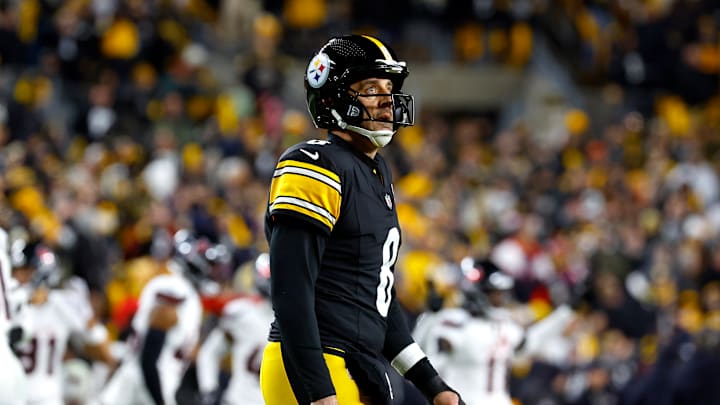
The Pittsburgh Steelers worked tirelessly to cover up the ugly. Offseason acquisitions were meant to be solutions, but in hindsight, many felt more like bandages slapped over an offense with deep, unresolved wounds. The quarterback position sat at the center of it all.
Aaron Rodgers, DK Metcalf, and Jonnu Smith were valuable additions—until the moment they weren’t. And during an epic, disappointing Monday Night Football loss to the Houston Texans, the harsh reality finally surfaced.
There is no way to sugarcoat it. Monday night was horrific.
What was supposed to be a celebration—Pittsburgh hosting its first playoff game in years—quickly devolved into one of the franchise’s most deflating postseason performances in recent memory. The 30–6 loss didn’t just sting; it exposed. Fans knew DeMeco Ryans’ defense was legitimate, anchored by Will Anderson Jr. and Danielle Hunter.
What they didn’t expect was to watch a future Hall of Fame quarterback look completely overmatched on the game’s biggest stage.
Throughout the regular season, Rodgers’ veteran presence masked many of Arthur Smith’s offensive shortcomings. His command at the line of scrimmage, experience against pressure, and ability to steady the offense helped Pittsburgh survive inconsistency. But Houston wasn’t just another defense. It was a disciplined, fast, and relentless unit that forced the Steelers to confront something they had managed to avoid all year.
Despite forcing three C.J. Stroud turnovers on defense—more than enough to swing a playoff game—Pittsburgh’s offense failed to capitalize. Painfully so. The Steelers converted just 2 of 14 third-down attempts, spending far more time staring at third-and-long than anywhere near the end zone. Drives stalled. Momentum vanished. Hope faded.
When it was time for Rodgers to work his magic, the wand never sparkled.
Aaron Rodgers deserves blame for the Pittsburgh Steelers' malfunction during the Wild Card round
At 42 years old, Rodgers’ lack of mobility became an unavoidable liability. Houston’s edge rushers took full advantage, collapsing the pocket and stripping away any sense of comfort. The turning point came brutally—a 33-yard fumble return for a touchdown in the third quarter that effectively sealed Pittsburgh’s fate. Later, Houston intercepted Rodgers and returned it for a garbage touchdown.
It was a gut punch that sucked the remaining life out of Acrisure Stadium.
Rodgers fought until the end, but it felt more like a strained attempt at greatness than greatness itself. The throws lacked rhythm. The offense lacked belief. And the scoreboard told a story no one in black and gold wanted to read.
Watching Mike Tomlin’s team unravel on such a grand stage was difficult. This group was given multiple opportunities to wrestle control from the Texans. Instead, they were bulldozed in a sloppy, disjointed fashion. The experiment—the bold, risky bet on an aging All-Pro quarterback—was revealed for what it truly was.
Rodgers finished the night without leading his team to the end zone. He completed 17 of 33 passes for 146 yards, absorbed four sacks, and walked off the field visibly battered. The bruises were physical, but the damage ran deeper. This performance will spark uncomfortable questions throughout the organization.
The loss hurt more than missing the playoffs altogether. It hurt because it showed the limits of patchwork fixes and veteran gambles. Monday night forced the Steelers to face an undeniable truth: sometimes experience isn’t enough, and sometimes the risk doesn’t pay off.
For Pittsburgh, the reality was harsh—and unavoidable.
 Add us as a preferred source on Google