

In 1983, I was fourteen years old. I had grown up watching the Pittsburgh Steelers of the 1970s, enjoying the success they had during that decade. They had won four Super Bowls in the span of six years, winning back-to-back Lombardi Trophies twice. That was unheard of at the time.
The 1983 NFL draft was legendary, in my opinion. There were seven future Hall of Fame players drafted in the first round. There were six quarterbacks taken in the first round, three of whom would ultimately be enshrined in the Pro Football Hall of Fame.
One quarterback, in particular, who would eventually wear the Gold Jacket was Dan Marino, a local product who attended Pittsburgh and was drafted twenty-seventh overall, which was the next to last pick in the first round at the time. The Steelers had the twenty-first pick and selected a nose tackle out of Texas Tech.
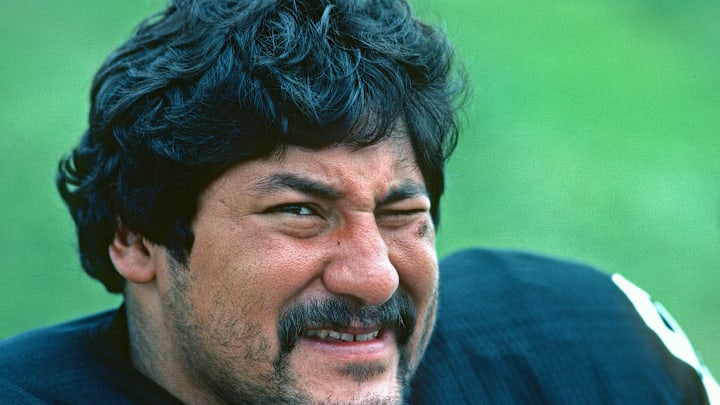
Admittedly, I knew nothing about Gabe Rivera, primarily because not very many Texas Tech games were televised in the Philadelphia market where I lived. We didn't have cable television back then either. Whatever games were on the local channels were the games I watched. Steelers fans know how things worked out, though.
The Pittsburgh Steelers franchise may have taken quite a different path had Dan Marino been selected in the 1983 draft
Let me preface what we are about to discuss with this statement: You can't compare a one-year career to a seventeen-year career, but hypotheticals are hypotheticals for a reason. I do believe that had Rivera not been involved in a tragic car accident, he would have had a good career.
Rivera was very productive at Texas Tech, having earned All-American honors in 1982, which was his senior year. After 'Mean' Joe Greene retired following the 1981 season, the Steelers' defense underwent a dramatic change, one that exists to this day.
In 1982, we switched the defensive scheme from a 4-3 base alignment to a 3-4 base alignment. This was a shock to me and represented a fundamental shift in both their approach and in the personnel they would draft for the next four decades.
Playing a base 3-4 inherently meant that the nose tackle, as it was referred to back then, would face double-team blocks frequently. Because of this aspect of the game, the nose tackle not only had to be able to command those double-team blocks but would have to absorb them to free up the middle linebackers, which is what inside linebackers were referred to as back then.
Read More: DK Metcalf's suspension is quietly crushing the Steelers right now
Listed at 6-2 and weighing a shade under 300 lbs, Rivera was considered a 'big man' in 1983. Considering 'Mean' Joe was listed at 275 lbs, the extra weight certainly lent itself to being a fit for a base 3-4 scheme. In six games, Rivera recorded two sacks. He would never see the field again.
We can only speculate about the player Rivera could have been, but we don't need to speculate about Marino, who was phenomenal at Pitt, throwing for almost 8,000 yards and 74 touchdowns; he was the 'real deal'. I remember watching Pitt games and thinking that his arm talent made him special.
I don't think we need to delve too much into the Hall of Fame career Marino enjoyed, but suffice it to say, he would have made an immediate impact. In 1984, he emerged victorious in the AFC Championship game against the Steelers.
I remember watching that game and thinking that they probably had no real shot at beating the Dolphins, but the real question is this: would they have beaten the San Francisco 49ers in Super Bowl XIX? I'm a realist, so I will say that they probably would not have beaten the 49ers, but they would have realized that our next franchise quarterback was in the building, so to speak.
Marino and the Dolphins made the playoffs in ten of his seventeen years; however, they were never able to reach the Super Bowl again. Pittsburgh made it to the Super Bowl after the 1995 season. Would they have beaten the Dallas Cowboys with Marino at the helm?
I dare say the Steelers would have beaten the Cowboys with Marino at quarterback. That would have been Super Bowl victory number five for the franchise. Would they also have beaten the Denver Broncos in the 1997 AFC Championship game? You get the point by now.
The point of this particular discussion has been hypothetical, but I firmly believe, having watched Marino play both at Pitt and during his seventeen-year career, that the trajectory of the Steelers franchise would have been radically different had they kept him in the Steel City.
 Add us as a preferred source on Google