

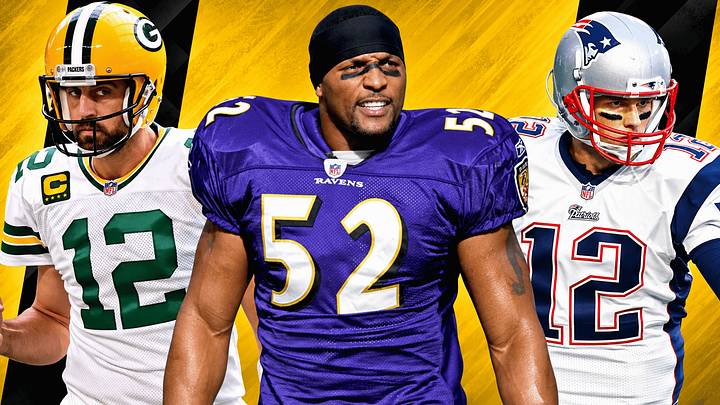
Tom Brady, Jim Brown, and Patrick Mahomes walk into a bar... Just kidding.
Tom Brady, Jim Brown, and Patrick Mahomes belong among the 25 opponents who’ve done the most damage to the Pittsburgh Steelers. They got there in different ways. Brown punished Pittsburgh for years, Brady repeatedly blocked its road to the Super Bowl, and Mahomes made even a promising start against Kansas City feel temporary.
This isn’t a ranking of the NFL’s best players who happened to face Pittsburgh. A division rival could earn his place by causing trouble twice a year. Someone else needed only one playoff game to leave a mark that lasted decades. The standard is what the player actually did to the Steelers, and what his performance cost them.
Some of these selections come with an argument. Pittsburgh beat several Ravens stars when the stakes were highest, while a few one-game villains never got another chance to repeat their work. Still Curtain’s toughest playoff losses show why a single afternoon can belong in the same conversation as a long rivalry. Both kinds of pain count here.
Jim Brown, RB: The original Pittsburgh Steelers’ killer
The Steelers used the fifth pick in the 1957 draft on Len Dawson. Cleveland took Jim Brown with the next selection. Dawson became a Hall of Famer elsewhere, which means the Steelers got the talent right and the outcome painfully wrong, but Pittsburgh still had to face Brown twice a year. The Steelers’ account of that draft lays out a particularly rough bit of franchise history.
Brown ran for 175 yards against Pittsburgh in an October 1963 meeting, one of many reminders that tackling him was everybody’s job and rarely anybody’s pleasure. The Steelers eventually built defenses that defined an era. Brown belonged to the earlier era, when Cleveland had the player Pittsburgh passed over, and the Steelers were the ones trying to survive him.
Ken Stabler, QB
Ken Stabler quarterbacked the Raiders teams that kept crossing paths with the Steelers in the 1970s. Oakland knocked Pittsburgh out of the 1973 playoffs and beat it again in the 1976 AFC Championship Game. Stabler could extend a play and find a throw after a defense seemed to have taken away the sensible options.
Pittsburgh won the bigger share of their postseason fight, eliminating Oakland on its way to championships after the 1974 and 1975 seasons. That’s why Stabler belongs here as an enemy rather than some unbeatable force. The Raiders finally got past the Steelers in 1976, though Pittsburgh was missing Franco Harris and Rocky Bleier in that title game. Both the rivalry and that limitation are part of the story.
Marcus Allen, RB
Marcus Allen helped turn Pittsburgh’s trip to Los Angeles in the 1983 divisional round into a 38-10 Raiders win. He rushed for 121 yards and two touchdowns on just 13 carries. The Steelers had survived the end of their 1970s dynasty well enough to make the postseason, but Allen gave them little chance to stay there.
Allen’s speed through a crease made that afternoon especially punishing. Pittsburgh couldn’t crowd the line and expect a short gain; one missed fit could become a long run. He later starred in the Raiders’ Super Bowl victory, while the Steelers went home having seen just how much separation existed between a playoff berth and another championship run.
John Elway, QB
John Elway ended two strong Pittsburgh seasons, with eight years between the losses. His Broncos beat the Steelers 24-23 in the divisional round after the 1989 season, when a late Denver touchdown wiped out Pittsburgh’s lead. Elway returned to beat them 24-21 in the AFC Championship Game after the 1997 season.
The 1997 defeat stung because Pittsburgh had beaten Denver in the regular season and was playing the title game at home. The Steelers had the roster to reach a Super Bowl, but Elway’s passing gave the Broncos answers whenever Pittsburgh needed a stop. For fans who watched both losses, a late lead against Denver never felt like enough.
Larry Brown, CB
Dallas Cowboys cornerback Larry Brown intercepted Neil O’Donnell twice in Super Bowl 30 and won the game’s MVP award. Both picks gave Dallas short fields in a 27-17 Steelers loss. One of the hardest parts to revisit is that Pittsburgh had rallied to within three points before Brown’s second interception helped put the game away. The NFL’s Super Bowl 30 account confirms how much his two takeaways changed the afternoon.
Brown didn’t spend years tormenting the Steelers, and the throws remain up for debate. None of that reduces the damage. Pittsburgh had fought its way back into the game against a Cowboys team chasing its third title in four seasons. Brown gave Dallas the possessions that kept the Steelers from finishing that comeback.
Terrell Davis, RB
Terrell Davis rushed for 139 yards against Pittsburgh in the 1997 AFC Championship Game. That production gave Denver a reliable answer even when the Steelers forced Elway to throw downfield. The Broncos won 24-21 at Three Rivers Stadium and went on to win their first Super Bowl.
Davis is easy to lose in a retelling centered on the two quarterbacks. Pittsburgh’s defense had to respect his cuts on every handoff, and Denver could keep handing him the ball while protecting a narrow lead. Elway supplied the passes people remember. Davis helped make sure the Broncos could finish the job.
Fred Taylor, RB
Fred Taylor ran for 234 yards and scored four total touchdowns in Jacksonville’s 34-24 win at Three Rivers Stadium in 2000. He had three rushing scores and caught another. According to the Jaguars’ Fred Taylor retrospective, no visiting running back had produced a bigger rushing game at the Steelers’ old home.
Jacksonville returned to Pittsburgh after the 2007 season and won a wild-card game 31-29, with Taylor again part of the offense the Steelers had to contain. He wasn’t the sole reason for that playoff loss; David Garrard’s late fourth-down run was decisive. Taylor’s place here rests on the whole matchup, especially the night he ran through a venue where visiting backs usually had a miserable time.
Ray Lewis, LB
Ray Lewis made Ravens games feel like a test of how long Pittsburgh’s offense could hold up physically. In Baltimore’s 35-7 win to open the 2011 season, he intercepted Ben Roethlisberger as the Ravens forced turnover after turnover. Lewis brought the tackle-to-tackle force that made routine runs and short throws feel contested.
Pittsburgh beat Lewis and Baltimore in all three postseason meetings during his Ravens career, so his place on this list needs some explaining. Lewis belongs because this list includes the opponents who made the Steelers earn those wins, too. He anchored the defense Pittsburgh had to solve in its most personal rivalry, and the Steelers deserve full credit for solving it when January demanded it.
Ed Reed, S
Ed Reed was the other reason those Steelers-Ravens games rarely allowed a careless throw. Lewis could punish an offense near the line of scrimmage; Reed could take away the reward for testing Baltimore deep. He intercepted Roethlisberger in the Ravens’ 2011 opening-day rout, a game in which Pittsburgh’s passing attack never found stable footing.
The Steelers got past Reed’s Ravens when they met in the playoffs, and they deserve credit. Reed remained a problem on every passing down. He had the range and instincts to turn one ambitious throw into Baltimore’s ball.
Terrell Suggs, OLB
Terrell Suggs attacked the part of the Steelers’ offense that held every passing play together. His strip-sack of Roethlisberger produced a Ravens touchdown in the 2010 divisional round, although Pittsburgh came back to win. In Baltimore’s 2014 wild-card victory, Suggs intercepted a deflected pass. He affected a game in ways beyond an ordinary sack total.
Roethlisberger’s ability to shrug off pressure was a Steelers advantage for years. Suggs could still beat a blocker, reach him, and change the down before a receiver had time to get open. The scoreboard only tells part of Pittsburgh’s history with Suggs: He didn’t win every matchup, but the Steelers couldn’t afford to block him like an ordinary pass rusher.
Tom Brady, QB
Brady beat the Steelers in the AFC Championship Games in 2004 and 2016. In the latter, he threw for 384 yards and three touchdowns as New England won 36-17. Pittsburgh had made its way back to the conference title game, only to spend the night chasing a passing offense that kept finding room.
AFC Championship 2016: Tom Brady padreando a los #Steelers con Chris Hogan 👌pic.twitter.com/bBy0TBLMJM
— Nación Patriota (@nacionpatriots) July 4, 2023
The full history needs one distinction. New England also beat Pittsburgh in the AFC title game after the 2001 season, but Brady was injured, and Drew Bledsoe finished the game. Brady did enough damage without getting personal credit for every Patriots loss. Still Curtain’s 2010 Patriots recap recalls another meeting in which Pittsburgh couldn’t keep him from dictating the game.
Rob Gronkowski, TE
Rob Gronkowski scored three touchdowns against the Steelers in 2010 and did it again in the 2015 season opener. By the time he caught nine passes for 168 yards in New England’s 2017 win at Pittsburgh, the assignment was painfully familiar. The Steelers knew where Brady wanted to go and still struggled to take away a tight end that big and that precise.
Gronkowski created an awkward choice for Pittsburgh’s defense. A smaller defender could stay near him in coverage and still lose at the catch point; a bigger defender could lose the race downfield. Brady deserves his own entry for operating that offense, but Gronkowski was a separate problem the Steelers never consistently answered.
Joe Flacco, QB
Joe Flacco drove Baltimore 92 yards for the winning touchdown in Pittsburgh in 2011, finishing the possession with a pass to Torrey Smith. He later threw two touchdowns as the Ravens beat the Steelers 30-17 in the 2014 wild-card round. The playoff result gave Flacco the kind of Pittsburgh win his earlier Ravens teams couldn’t secure.
Flacco had his moments against Pittsburgh, but the Steelers beat him in the postseason in 2008 and 2010. His best performances had a particular sting anyway. Baltimore could withstand the usual AFC North grind, then ask Flacco to make the throw that turned a close game into a Ravens win.
Aaron Rodgers, QB
Aaron Rodgers threw for 304 yards and three touchdowns as Green Bay beat Pittsburgh 31-25 in Super Bowl 45. The Steelers forced the Packers to keep playing to the finish, but Rodgers repeatedly found answers through the air and won the game’s MVP award. Pittsburgh reached the Super Bowl again just two seasons after winning its sixth championship and left without a seventh.
Rodgers’ entry has an unusual second chapter. He joined the Steelers in 2025 and returned for 2026, years after beating them on the league’s biggest stage. Pittsburgh fans can appreciate the quarterback wearing their jersey now without revising what he did in that Super Bowl. Few former opponents on this list have given them such a direct chance to hold both thoughts at once.
Tim Tebow, QB
Tim Tebow ended Pittsburgh’s 2011 season on the first play of overtime in Denver. His pass to Demaryius Thomas became an 80-yard touchdown and a heartbreaking 29-23 Broncos win. Tebow finished with 316 passing yards despite completing just 10 throws, which tells you how much damage Denver did when the Steelers committed to stopping the run.
14 years ago today, Tim Tebow and Demaryius Thomas gave the @Broncos a Wild Card win on the first play of OT 🙌 pic.twitter.com/D9R2xaRzEg
— NFL (@NFL) January 8, 2026
While it’s tempting to file the game under one shocking play, Denver had already connected on long throws earlier, and Pittsburgh’s defense kept giving Thomas room to turn catches into huge gains. Tebow was never the kind of prolific passer Brady was. For one playoff afternoon, the Steelers’ plan gave him exactly the opportunities he needed.
Demaryius Thomas, WR
Demaryius Thomas caught only four passes in that wild-card game against Pittsburgh. They went for 204 yards, including gains of 51 and 58 before his 80-yard overtime touchdown. Four catches were enough to erase a season’s worth of confidence in the Steelers’ pass defense.
Thomas also scored on a 71-yard catch-and-run when the Broncos beat Pittsburgh in their 2012 season opener, this time with Peyton Manning at quarterback. Manning threw to Thomas instead of Tebow, but Pittsburgh still had trouble bringing him down in space. The 71-yard touchdown gives Thomas a Steelers story beyond that overtime catch.
Leonard Fournette, RB
Leonard Fournette ran for 181 yards and two touchdowns when Jacksonville beat Pittsburgh 30-9 in the 2017 regular season. The Steelers got another shot at the Jaguars in the divisional round and allowed Fournette 109 rushing yards and three touchdowns in a 45-42 loss. One meeting could’ve been dismissed as a bad Sunday. The second ended a season that had seemed capable of much more.
Pittsburgh’s offense scored 42 points in the playoff rematch. Fournette’s production still meant Jacksonville could keep attacking on the ground as the Steelers tried to climb back. Still Curtain’s defensive fallout analysis captured the questions that followed that loss. Pittsburgh had seen Fournette do it once and still couldn’t keep him out of the end zone.
Patrick Mahomes, QB
Patrick Mahomes announced himself against Pittsburgh in 2018 with six touchdown passes in a 42-37 Kansas City win. He was just as ruthless in the 2021 wild-card round. The Steelers led that game after T.J. Watt scored on a defensive touchdown, but Mahomes threw five touchdown passes, and the Chiefs won 42-21.
The brief playoff lead showed Pittsburgh could make a play against Kansas City. It also showed the problem with relying on isolated plays to contain Mahomes. He could answer a turnover with a touchdown drive, attack a different matchup on the next possession, and leave the Steelers needing far more offense than they could produce that night.
Travis Kelce, TE
Travis Kelce caught two touchdown passes against Pittsburgh in the 2018 meeting. In Kansas City’s 2021 playoff win, he added a receiving touchdown and threw a short touchdown pass on a designed play. By the Chiefs’ Christmas Day win in 2024, Kelce was still finding openings and finished with another score.
Mahomes makes every coverage decision difficult, but Kelce creates his own trouble by finding space as a play develops. Different Steelers defenders kept running into the same problem: once a defender loses track of Kelce, Mahomes usually knows it. The trick-play pass was almost unnecessary. Almost.
Josh Allen, QB
Josh Allen threw for 424 yards and four touchdowns as Buffalo beat Pittsburgh 38-3 in 2022. In the wild-card round after the 2023 season, he threw for three scores, broke a 52-yard touchdown run, and led the Bills to a 31-17 win. Pittsburgh struggled to contain him whether he stayed in the pocket or left it.
The Steelers did win in Buffalo to open the 2021 season, so Allen hasn’t owned every meeting. The playoff loss showed how much a defense has to get right against him. Coverage can survive the first read and still fail if Allen finds a throwing lane or turns a broken play into a run Pittsburgh can’t catch.
Lamar Jackson, QB
The Steelers had a good answer for Jackson for much of their early rivalry. That’s what made Baltimore’s late-2024 breakthrough so jarring. Jackson threw three touchdowns in a 34-17 Ravens win in December, then helped end Pittsburgh’s season with a 28-14 wild-card victory weeks later. Those games changed the recent argument about which AFC North defense had figured out the other side.
Lamar Jackson buys time and finds Justice Hill for the TD! @Ravens up 21-0 👀#PITvsBAL on Prime Video
— NFL (@NFL) January 12, 2025
Also streaming on #NFLPlus pic.twitter.com/46SpU4WgJG
Jackson didn’t do it alone; Henry gave Baltimore a punishing ground game beside him. Pittsburgh also beat the Ravens in a January 2026 division decider, so the rivalry kept moving. Jackson earns this spot for the stretch when a matchup the Steelers had often controlled became the one that sent them home.
Joe Burrow, QB
Joe Burrow’s Bengals swept Pittsburgh in 2021, including a 41-10 win in Cincinnati. He threw four touchdowns in another Bengals victory at Pittsburgh in 2022, even though the Steelers intercepted him twice. Burrow could make a mistake and still keep producing enough explosive offense to beat them.
The Steelers have beaten Burrow, too, and every Bengals loss can’t be assigned to him personally. His place rests on how quickly Cincinnati learned to win this rivalry through its passing game. Pittsburgh’s defense could get pressure or take the ball away and still face another Burrow drive that could change the score.
Ja’Marr Chase, WR
Ja’Marr Chase caught 16 passes for 161 yards and a touchdown in Cincinnati’s 33-31 win over Pittsburgh in October 2025. The 16 receptions set a Bengals single-game record. The NFL’s account of Chase’s record puts a number on how often Cincinnati could get him the ball despite Pittsburgh knowing he was the main threat.
Flacco quarterbacked the Bengals that night, reminding everyone that Chase’s danger isn’t limited to his partnership with Burrow. He can win repeated chances against a defense that’s already trying to account for him. Pittsburgh lost by two points; one fewer productive Chase possession could’ve changed the result.
Myles Garrett, DE
Myles Garrett had three first-half sacks and forced a fumble in Cleveland’s snowy 24-19 win over Pittsburgh in November 2024. He impacted the game before the Steelers could settle into a protection plan, and every long passing down carried the risk that Russell Wilson would have to deal with Garrett in the backfield.
Myles Garrett sends the game to halftime with his THIRD sack!#PITvsCLE on Prime Video
— NFL (@NFL) November 22, 2024
Also streaming on #NFLPlus pic.twitter.com/0sP0TxKk62
Garrett has also played in Browns losses to Pittsburgh, which is why his case is about the matchup rather than Cleveland’s overall record. An offense can chip him, slide protection toward him, and still leave somebody else an easier route to the quarterback. Still Curtain’s account of that Browns loss covers Pittsburgh’s other mistakes; Garrett supplied enough pressure to make each one harder to overcome.
Derrick Henry, RB
Derrick Henry rushed for 162 yards in Baltimore's 34-17 win in December 2024. Three weeks later, he ran for 186 yards and two touchdowns in the Ravens’ 28-14 wild-card win. The Still Curtain review of that playoff loss reflects how thoroughly Baltimore controlled the game on the ground.
Pittsburgh had held Henry to 65 yards in a win earlier that season, so the playoff result wasn’t proof he couldn’t be stopped. Henry ran for 126 yards in the January 2026 division decider, but the Steelers won 26-24. That’s the task he leaves Pittsburgh twice a year. Limiting him helps, but when he gets going, the Steelers still have to find enough possessions and points to beat the Ravens anyway.
 Add us as a preferred source on Google