

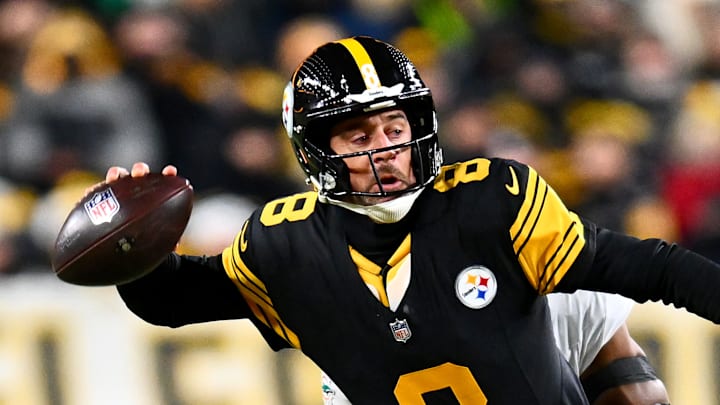
If anyone had told me that a December matchup against Mike McDaniel and Tua Tagovailoa would play a defining role in the Pittsburgh Steelers’ playoff journey, I would’ve believed them. What I wouldn’t have expected is how we arrived here. Yet under the primetime lights on Monday night, the Steelers once again found themselves playing with their food during a must-win game against the Miami Dolphins—and flirting dangerously with consequences they can’t afford.
Mike Tomlin’s teams aren’t perfect. They never have been. But the one thing that has long defined his tenure is the ability to rise when the moment demands it. December football, playoff pressure, national television—those are the environments where Pittsburgh is supposed to look most comfortable. For the first half of this crucial Week 15 AFC showdown, that identity was nowhere to be found.
The familiar issues resurfaced early and often, only this time they felt heavier. Sluggish starts. Missed opportunities. An offense stuck in neutral. If not for a stout defensive effort, this game could’ve slipped away quickly. With T.J. Watt sidelined, Patrick Queen stepped into the spotlight and carried the tone. Terrell Austin’s unit held Miami to just three points in the opening half, a massive accomplishment considering the speed and creativity of the Dolphins’ offense.
Asante Samuel Jr. delivered a momentum-changing moment by securing his first interception in the black and gold, while Queen and the front seven bottled up De’Von Achane and refused to let Miami establish any rhythm. It was a mandatory effort, the kind that keeps a team alive when the offense can’t return the favor.
Unfortunately, the offense sputtered in familiar fashion. Aaron Rodgers took punishment early, absorbing harsh hits as Pittsburgh repeatedly found itself behind the sticks. Arthur Smith’s play calling felt predictable, placing the offense in unfavorable down-and-distance situations that Miami eagerly exploited.
Pittsburgh Steelers must have a better second half against the Miami Dolphins
Drives stalled. Field position vanished. Scoring opportunities slipped through their fingers. A late offensive surge led by Kenneth Gainwell helped Pittsburgh sniff the goal line within the final minutes of the half. Eventually, Connor Heyward's tushpush gave Tomlin a 7-3 lead before the clock hit zero.
Rodgers entered the locker room visibly bruised after taking multiple sacks that knocked the Steelers out of scoring range, making it difficult for Tomlin’s team to dictate the flow of the game. Some of the decision-making didn’t help either. There were moments when Pittsburgh had a chance to seize momentum, only to let it drift away. In a game of this magnitude, those lapses loom large.
Still, it wasn’t all discouraging.
Jaylen Warren provided a much-needed spark despite being listed as questionable with an illness before kickoff. His effort alone spoke volumes. Five carries for 19 yards may not jump off the stat sheet, but the energy, toughness, and urgency he ran with were exactly what this offense needed. Warren didn’t just move the ball—he reminded his teammates what fighting through adversity looks like.
The first half wasn’t pretty. It wasn’t dominant. It certainly wasn’t Steelers football at its best. But it also wasn’t a lost cause. The defense kept Pittsburgh within striking distance, and the effort was there—even if the execution lagged behind.
If the Steelers want to keep their playoff aspirations alive, “playing with their food” has to stop. December football doesn’t reward hesitation. The margin for error is gone. The second half demanded more—and whether Pittsburgh answered that call would define far more than just one Monday night.
 Add us as a preferred source on Google