

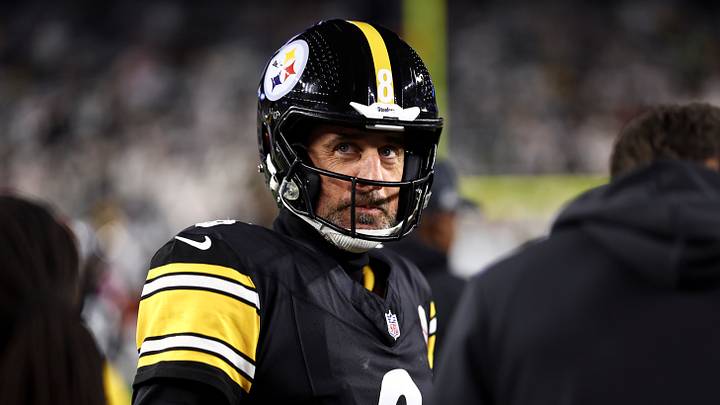
On Sunday night, the Pittsburgh Steelers were completely embarrassed by the Cincinnati Bengals, suffering a 38-18 loss that exposed many of the same issues that have plagued this team for years. After defeating Cincinnati in Week 3 at home, there was plenty of excitement surrounding this second matchup.
With first place in the AFC North on the line, two of the hottest teams in the NFL were set to meet in a game that many viewed as a measuring stick for Pittsburgh.
It didn't take long for the Bengals to show they were the better team. Despite coming off a bye week and entering the matchup healthier than they had been in weeks, the Steelers were completely outclassed.
As Sunday night approached, there was growing optimism that this team might actually be different. Could Pittsburgh finally be a legitimate threat against the AFC's elite? Could this be the team that proves it won't simply be a first-round exit or an easy matchup for whoever they face in the Wild Card round?
For much of the season, there were reasons to believe things might be different. The defense was playing at a high level, the running game was one of the best in the NFL, and perhaps a new coaching staff was exactly what this team needed to take the next step.
But Sunday night was a harsh reminder that the Steelers are still a mediocre football team that, outside of their divisional matchups, hasn't done much to prove it can compete with the league's best. It's time for fans to take off the black and gold glasses and face reality: this 2026 Steelers team looks awfully similar to the teams we've watched struggle for years.
The Pittsburgh Steelers' defense was exposed
One of the biggest concerns heading into this game was whether Pittsburgh's defense could slow down Cincinnati's offense. The Steelers had made improvements defensively since their first meeting in Week 3, but going against Joe Burrow, Ja'Marr Chase, and Tee Higgins was always going to be a major test. Unfortunately, they had no answer.
Burrow threw for 409 yards and four touchdowns, while Chase completely took over the game with 11 receptions for 231 yards. Higgins added another five catches for 66 yards, and Cincinnati's other pass catchers consistently found ways to get open and make plays. The Bengals' passing attack had its way with Pittsburgh's secondary from start to finish.
To some extent, you have to give Cincinnati credit. Burrow played like one of the best quarterbacks in football, and Chase was nearly impossible to contain. However, this game also exposed a major weakness that could continue to haunt Pittsburgh throughout the rest of the season.
Even with an improved pass rush and better overall defensive play calling, the Steelers' secondary remains a major concern. Their reliance on zone coverage, combined with a lack of confidence in their ability to consistently match up in man coverage, creates problems against high-level quarterbacks and elite receiving groups. They can have one of the best defensive fronts in the NFL, but none of that matters if the secondary can't hold up on the back end.
In a conference featuring quarterbacks like Burrow, Patrick Mahomes, Josh Allen, and Trevor Lawrence, Pittsburgh cannot afford to have its secondary repeatedly exposed. If this is what happens against Cincinnati, it's difficult to feel confident about this defense holding up against the AFC's best when January arrives.
The Steelers' offense has too many limitations that hard holding them back
The other major takeaway from Sunday night was just how limited Pittsburgh's offense can be when the running game isn't working. For much of the season, the Steelers have relied on their ability to control the game on the ground, take pressure off Aaron Rodgers, and let the defense do the rest. But when that formula doesn't work, what exactly can this offense do?
The answer, at least right now, isn't much.
Rodgers is nearing the end of his career and simply isn't the quarterback he once was. At this stage, he's playing like a bottom-10 starting quarterback, and Pittsburgh doesn't have the receiving talent or passing attack to consistently overcome his limitations. The wide receiver room remains a concern, and there isn't enough offensive firepower to put pressure on opposing defenses when the running game gets shut down.
That's a major problem for a team with legitimate playoff aspirations. If the defense can't slow down a high-end quarterback and the opposing defense is good enough to take away Pittsburgh's running game, the Steelers have very few answers. They aren't built to win shootouts, and Sunday night showed just how quickly things can get out of hand when they fall behind and are forced to throw the football.
The Steelers still aren't built for a playoff run
At the end of the day, Pittsburgh's path to winning a playoff game is becoming increasingly clear, and it's not an easy one. The running game needs to remain one of the most productive in football, the defense needs to play at an elite level, and Rodgers needs to avoid putting the offense in situations where he's forced to carry the team.
Everything has to go right for this team to have a legitimate chance. If one or two of those things don't happen, Pittsburgh simply doesn't have the offensive firepower or defensive consistency to overcome it.
Good teams find ways to adjust when things aren't going according to plan. They can win different types of games, overcome mistakes, and find ways to compete when their original game plan isn't working. The Steelers haven't shown they can do that consistently, especially against the better teams in the AFC.
Sunday night was supposed to be an opportunity for Pittsburgh to prove it belonged in the conversation with the conference's elite. Instead, it was another reality check. The Steelers might still be good enough to win the AFC North and make the postseason, but being a playoff team and being a legitimate Super Bowl contender are two very different things. Right now, Pittsburgh has done very little to prove it's capable of being the latter.
 Add us as a preferred source on Google