

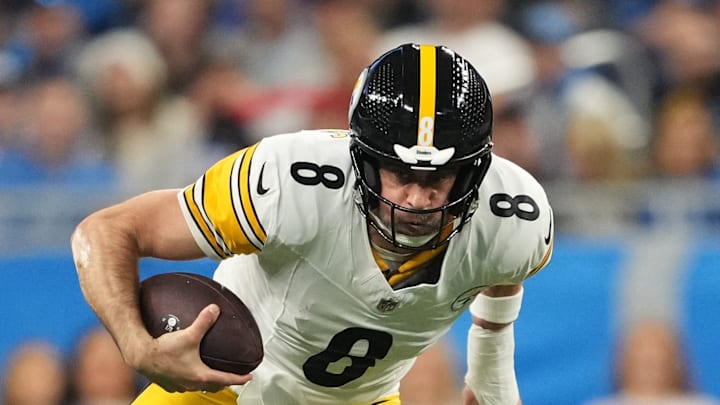
It’s impossible to predict the future in the NFL. Careers rise and fall quickly, and decisions that look brilliant on paper can unravel just as fast on the field. Somehow, though, Omar Khan and the Pittsburgh Steelers front office came awfully close to seeing this one clearly. Their decision to trust a 42-year-old Aaron Rodgers with the keys to the franchise felt risky, even desperate, to some observers.
After a few injury-riddled and uneven seasons, the move raised eyebrows across the league. But to those inside the building, it was a calculated gamble—one that has paid off more with each passing week.
Sunday’s crucial Week 16 win over the Detroit Lions was the clearest example yet.
Rodgers didn’t overwhelm the box score, but he didn’t need to. His 266 passing yards and a touchdown told only part of the story. Completing 27 of 41 attempts, Rodgers played with poise, rhythm, and control, keeping Arthur Smith’s offense on schedule and out of trouble. In a game packed with postseason implications, efficiency mattered more than flash. The Steelers needed calm leadership. They got exactly that.
From the opening drive, it was evident that Smith trusted his quarterback. Why wouldn’t he? Rodgers entered the week ranked 20th in passing yards with 2,594 and had already thrown 22 touchdown passes on the season. More importantly, he had delivered in the moments that define seasons—late-game drives, critical third downs, and even a signature upset win earlier in the year that shifted the tone of Pittsburgh’s campaign.
The Aaron Rodgers effect has had a positive impact on the Pittsburgh Steelers
Against Detroit, Rodgers’ impact went far beyond the stat sheet. His veteran awareness was on full display. Subtle hand signals to wide receivers before the snap threw defenders off just enough to create separation. One of those moments directly led to a 45-yard Jaylen Warren scamper, a play that flipped field position and momentum in Pittsburgh’s favor. It wasn’t drawn up as a highlight throw, but it was a masterclass in situational football.
Rodgers knew the stakes.
He knew the Lions were fighting to stay alive. And he knew the Steelers needed this game to maintain control of their destiny in the AFC North. Every decision reflected that awareness. He checked into the right looks, avoided forcing throws, and consistently put his teammates in positions to succeed. That’s not just quarterback play—that’s leadership.
READ MORE: It only took one miraculous play for Steelers veteran to silence doubts
This is everything Pittsburgh hoped for when they handed Rodgers the reins. At 42, he isn’t trying to prove he’s the future. He’s proving he’s still capable in the present. There’s a difference. His experience has brought stability to an offense that once felt fragmented. Young players benefit from his command. Coaches benefit from his trustworthiness. And the team benefits from knowing their quarterback won’t blink when the pressure rises.
Rodgers is “just” 42, as some like to say—but that perspective misses the point. What the Steelers received in return for their faith is a motivated gunslinger with something left to prove and the football IQ to elevate everyone around him. For a franchise built on timing, toughness, and belief, it’s a relief to know leadership made the right call.
And in December football, that belief can carry you a long way.
 Add us as a preferred source on Google