

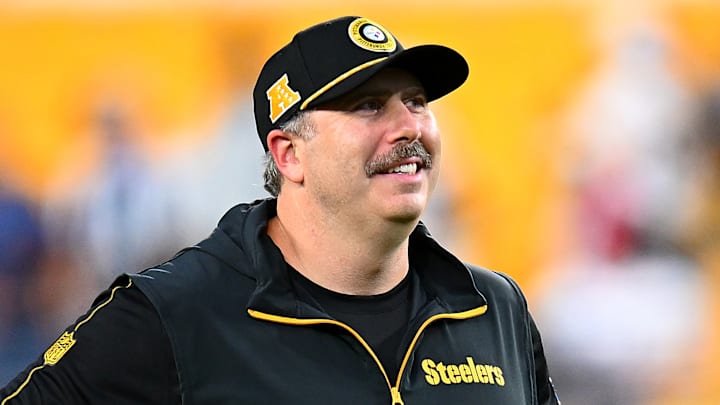
Must-win football games have a way of exposing exactly what a team is made of. They don’t just test talent—they test conviction. How far are you willing to go to win? Are you brave enough to break tendencies when the moment demands it? On Monday Night Football, Mike Tomlin and the Pittsburgh Steelers answered those questions the right way.
And in the process, they fixed many of the offensive issues that had plagued them all season in one crucial game against the Miami Dolphins.
For months, frustration simmered. Conservative play-calling, stalled drives, and missed opportunities became familiar patterns. Fans begged for urgency, creativity, and trust. Tomlin and offensive coordinator Arthur Smith heard the noise, but more importantly, they felt the pressure. In a game the Steelers simply could not afford to lose, the coaching staff finally took the gloves off—and the difference was undeniable.
From the opening half, Pittsburgh played with a level of aggression that had been missing. Fourth downs weren’t treated like emergencies; they were embraced as opportunities. It wasn’t reckless. It was calculated. And it worked. The Steelers converted all three of their fourth-down attempts using Connor Heyward's tushpush, each one extending drives and shifting momentum.
Those conversions didn’t just keep the offense on the field—they sent a message to the entire stadium that this team was done playing scared.
That mindset change showed up everywhere. Pittsburgh controlled the tempo, winning the time-of-possession battle with 33:33 minutes. For an offense that had struggled to sustain drives, that number mattered. It meant fewer three-and-outs. Fewer desperate situations. More opportunities to lean on physicality and wear Miami down.
The Pittsburgh Steelers must keep an aggressive offensive approach to clinch the playoffs
These were the ingredients fans had been pleading for since September.
Arthur Smith’s unit looked different—more cohesive, more confident, and more efficient. Play calls flowed instead of feeling forced. The offense attacked instead of reacting. There was balance, intent, and most importantly, trust in the players to execute when the stakes were highest. That transformation didn’t happen by accident. It was the result of a coaching staff willing to adjust when the season was hanging in the balance.
Mike Tomlin deserves credit for setting that tone. Conservative football has its place, but December football demands courage. Tomlin understood that survival required more than discipline—it required belief. Belief in his players. Belief in his staff. And the belief that calculated risks were better than passive losses.
The most encouraging part? This wasn’t a one-off gimmick.
The aggression was baked into the game plan. It wasn’t situational desperation; it was intentional strategy. That distinction matters moving forward. It’s hard to crawl back into a conservative shell after proving what this offense can be when unleashed.
Now the question becomes consistency. Can the Steelers replicate this approach as they sprint toward postseason positioning in a crowded AFC race?
They’ll have to. The margin for error is gone. The motto is simple: win or go home. Monday night felt like a turning point—not because the offense was perfect, but because it finally became what it needed to be.
It was refreshing. It was validating. And perhaps most importantly, it showed that Pittsburgh’s offensive struggles weren’t permanent—they were fixable. Fans knew what was missing from the start. On Monday night, Tomlin and Smith finally put it all together when it mattered most.
 Add us as a preferred source on Google